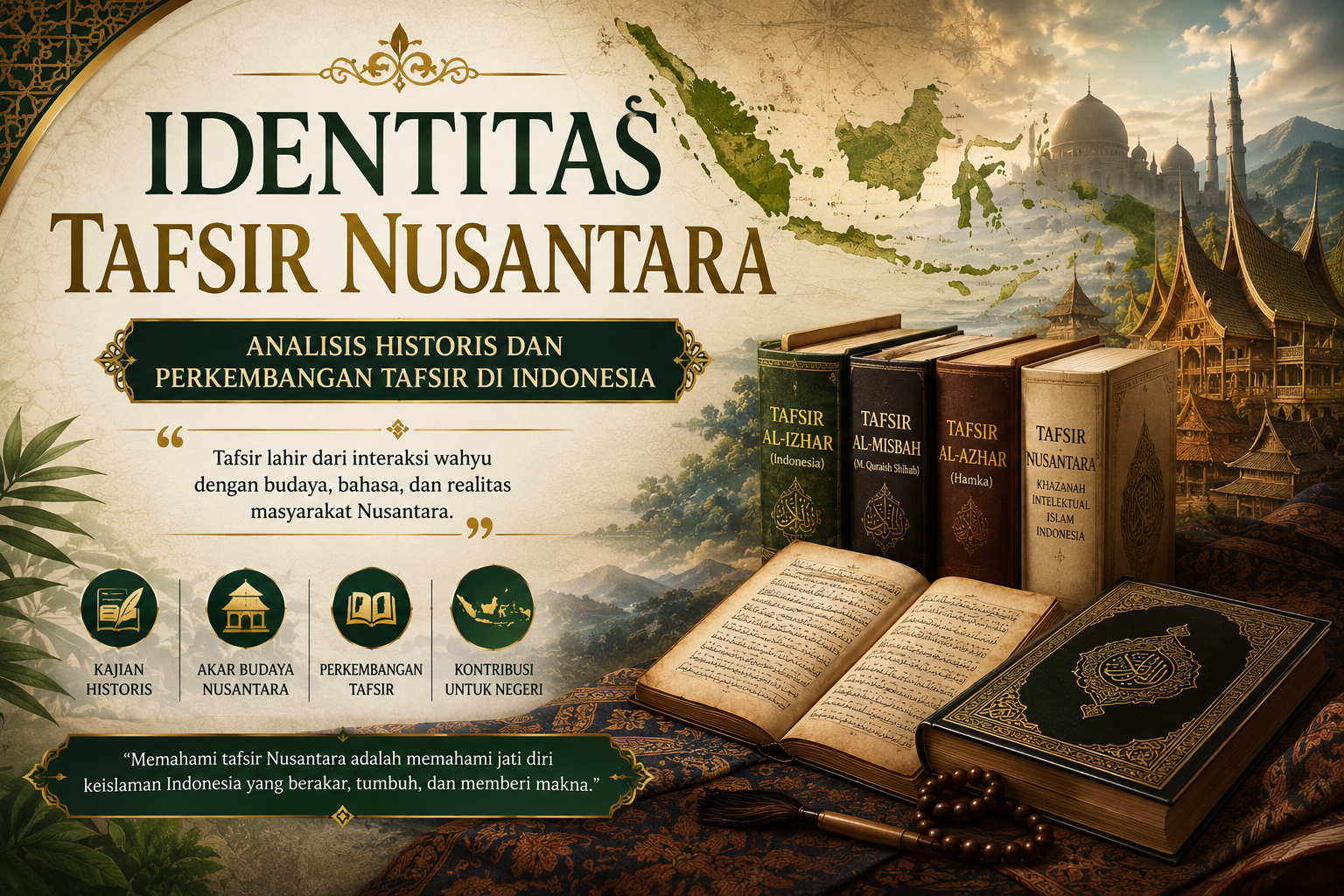
Identitas Tafsir Nusantara: Analisis Historis dan Perkembangan Tafsir Di Indonesia
DOI:
https://doi.org/10.56874/kauniyah.v7i1.3213Keywords:
Tafseer Nusantara, periodization, Al-Qur'anAbstract
Tafsir Nusantara is an essential part of the development of Quranic studies in Indonesia, demonstrating Islam's ability to adapt to local culture and societal conditions. This article aims to examine the development of Tafsir Nusantara, its per iodization, prominent figures along with their works, and its contribution to Islamic thought in Indonesia. This study employs a qualitative method by analyzing various literary works related to the history and development of Quranic exegesis in the archipelago. The results of the study show that the development of Tafsir Nusantara progressed through four periods: the classical period, the middle period, the pre-modern period, and the modern period. Each period possesses its own distinct characteristics, influenced by the social, cultural, educational, and intellectual development of the society. Figures such as Abdul Rauf as-Singkili through his work Tarjuman al-Mustafid and Buya Hamka through Tafsir al-Azhar made significant contributions to building an exegesis tradition that is contextual and relevant to the needs of the Indonesian people. Furthermore, Tafsir Nusantara plays a crucial role in addressing various social-religious issues as well as strengthening Islamic thought that is moderate, inclusive, and adaptive to the changing times.
References
.
Downloads
Published
Issue
Section
License
Copyright (c) 2026 Al-Kauniyah: Jurnal Ilmu Al-Qurán dan Tafsir

This work is licensed under a Creative Commons Attribution-NonCommercial-ShareAlike 4.0 International License.
![]()
Al-Kauniyah: Jurnal Alquran dan Tafsir by Program Studi Ilmu Al-Qur'an dan Tafsir STAIN Mandailing Natal is licensed under a Lisensi Creative Commons Atribusi-NonKomersial-BerbagiSerupa 4.0 Internasional.