
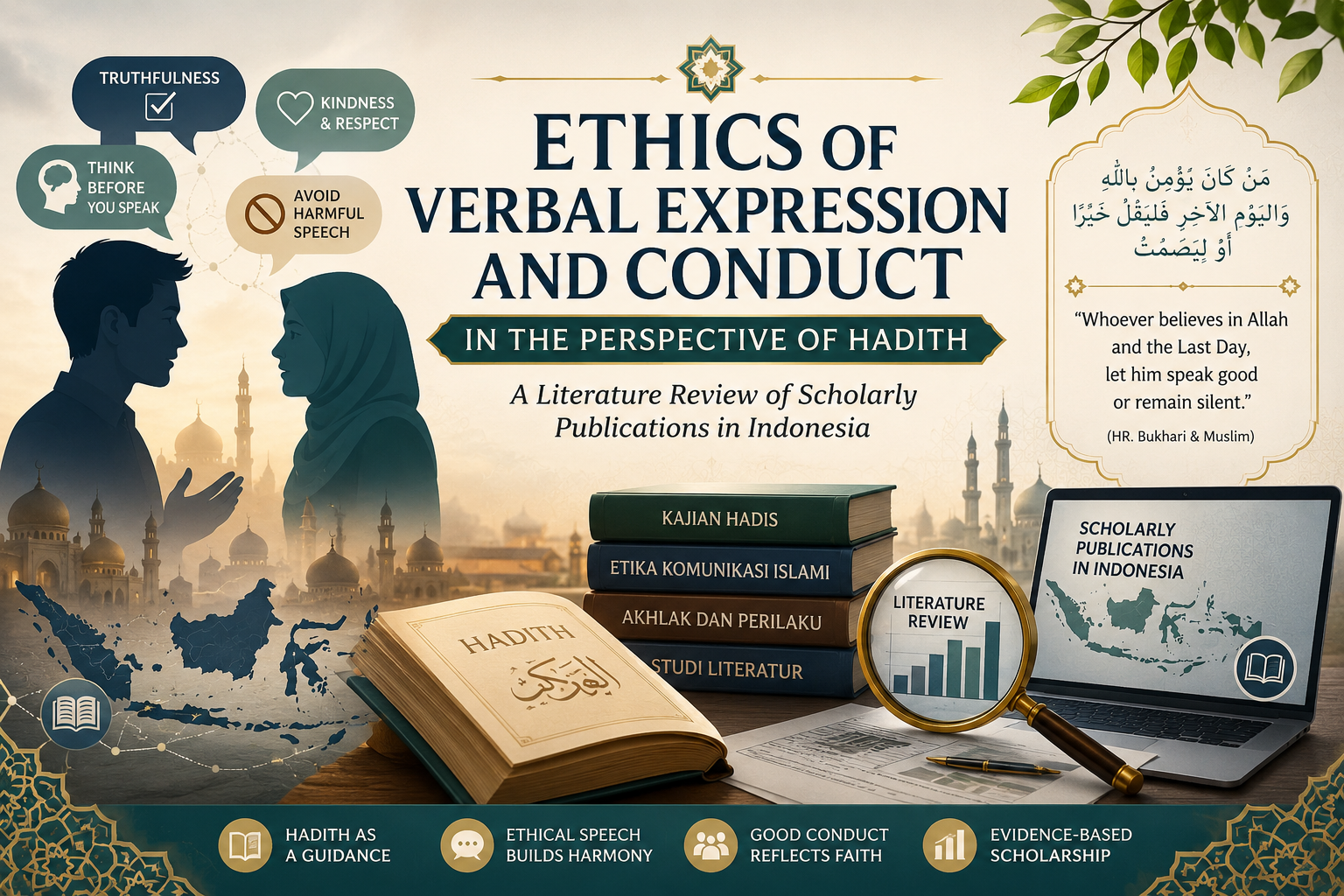
Ethics of Verbal Expression and Conduct in the Perspective of Hadith: A Literature Review of Scholarly Publications in Indonesia
DOI:
https://doi.org/10.56874/sm-jis.v1i1.2883Keywords:
Speech Ethics, Behavioral Ethics, Hadith Of The ProphetAbstract
This study examines scholarly article publications on the theme of ethics of speech and conduct from the perspective of Prophetic hadith. The background of this study highlights the need for a more comprehensive understanding of Islamic moral values that emphasize the importance of guarding one’s speech and improving one’s actions as reflections of faith. The purpose of this research is to analyze the trends, characteristics, and tendencies of academic publications discussing the ethics of speech and conduct from a hadith perspective in Indonesia. The main focus includes mapping publication years, journal accreditation, authors’ institutional affiliations, and the development of research themes. This study employs a qualitative descriptive method with a literature review approach. Data were obtained through a systematic search of scholarly articles using Google Scholar and Dimensions with keywords related to maintaining speech and conduct. A total of 20 relevant articles were analyzed systematically and further mapped using bibliometric analysis assisted by VOSviewer to identify term relationships and thematic trends. The results indicate a significant increase in publications during the 2020–2022 period. In terms of themes, the studies are dominated by legal perspectives, particularly those related to verbal agreements and their juridical implications, followed by cultural themes focusing on oral literature and local wisdom, as well as religious themes addressing the ethics of speech within Islamic and Sufi perspectives. Social, educational, and interdisciplinary themes remain relatively limited. Moreover, only a small number of studies explicitly position hadith as the main object of analysis, while most research still discusses the ethics of speech and conduct in a partial manner. These findings reveal a significant research gap, highlighting the need for the development of more holistic hadith-based studies to strengthen ethical and moral formation in contemporary society.
Downloads
References
Abdullah, N., Didipu, H., & Lantowa, J. (2021). Pesan Keluarga Sakinah dalam Teks Puisi Lisan Palebohu (Suatu Penelitian Berdasarkan Kajian Hermeneutika). Jurnal Bahasa, Sastra, dan Budaya, 11(2), 23–42. https://doi.org/10.37905/jbsb.v11i2.10113
Ab? ‘?s? Mu?ammad bin ‘?s? bin Saurah bin M?s? bin a?-?a???k at-Tirmidz?,. (1998). Kit?b az-Zuhd, (B?b M? J?’a f? ?if? al-Lis?n,). D?r al-Gharb al-Isl?m?.
Ach. Puniman. (2018). Keutamaan Menjaga Lisan dalam Perspektif Hukum Islam. Jurnal YUSTITIA, 19. https://download.garuda.kemdikbud.go.id/article.php?article=3271705&val=28707&title=KEUTAMAAN%20MENJAGA%20LISAN%20DALAM%20PERSPEKTIF%20HUKUM%20ISLAM
Agustina, A. P. (2023). Perubahan pola komunikasi keluarga di era digital. Global Komunika, 6(2), 73–80.
Assagaf, J. (2015). Jejak-jejak Cahaya Nabi Muhammad saw. Kontekstualisasi Hadis.
Astuti, K., Sukendri, N., & Wiguna, I. B. A. A. (2024). Mengelola Risiko Hukum dalam Pengelolaan Tanah: Studi Tentang Praktik Perjanjian Lisan dan Tertulis. Dharma Sevanam?: Jurnal Pengabdian Masyarakat, 3(2), 186–197. https://doi.org/10.53977/sjpkm.v3i2.2136
Auliya, I. (n.d.). PELATIHAN DAKWAH BIL LISAN MELALUI KEGIATAN KULIAH TUJUH MENIT PADA SANTRI DI PONDOK PESANTREN AN NADHIRA KALIBEBER.
Dalle, A., & Tobroni, T. (2025). Dimensi-dimensi dalam beragama: Spiritual, intelektual, emosi, etika, dan sosial. Ikhlas: Jurnal Ilmiah Pendidikan Islam, 2(1), 151–165.
Dewi, A. C., Ramadhan, B., Fadhil, A. A., Fadhil, F., Idris, A. M., Hidayat, M. R., & Yusrin, M. A. D. (2023). Pendidikan moral dan etika mengukir karakter unggul dalam pendidikan. IJOCE: Indonesia Journal of Civic Education, 3(2), 69–76.
Dinda Arisa Br. Pulungan, M. (2021). Akibat Hukum Kuasa Lisan Pembuatan Akta Notaris. Recital Review, 3(1), 1–21. https://doi.org/10.22437/rr.v3i1.11520
Fajrimustika, N., Soepandji, K., & Parwitasari, H. (2024). Asas Pemisahan Horizontal Pada Hak Sewa Untuk Bangunan Di Atas Tanah Hak Milik Yang Diperjanjikan Secara Lisan Dan Tanpa Batas Waktu (Studi Putusan Nomor 107/Pdt/2021/Pt Bdg). Indonesian Notary, 5(4). https://doi.org/10.21143/notary.vol5.no4.143
Gery Hummamul Hafid, M. (n.d.). Perintah Menjaga Lisan dalam Perspektif Hadis. 9.
Hamzah, S. I. (n.d.). Keabsahan Kontrak Lisan dalam Perspektif Hukum Positif dan Hukum Islam.
Hanifah, N., Fahri, M. A., & Shakilla, N. G. (n.d.). Makna yang terkandung dalam tradisi lisan manolam di airtiris pada era modern. Jurnal Pendidikan dan Kebudayaan.
Hasugian, R. M. (2017). Upacara Kematian Saur Matua Batak Toba: Analisis Tradisi Lisan. LINGUA: Jurnal Bahasa, Sastra, dan Pengajarannya, 14(2). https://doi.org/10.30957/lingua.v14i2.326
Hati, L., Muslihah, N. N., & Lazuardi, D. R. (2022). Analisis Nilai Pendidikan Karakter dalam Permainan Rakyat Sebagai Salah Satu Folklor Sebagian Lisan pada Anak Usia SD di Kelurahan Watas Kecamatan Lubuklinggau Barat 1 Kota Lubuklinggau. 2(1).
Himmawan, D., Rizky, W. R., Ningsih, Y. A., & Putrawan, F. (2024). Akhlak, Ethics and Morals in View of the Verses of the Qur’an and Hadith of the Prophet Muhammad SAW. Aslama: Journal of Islamic Studies, 1(4), 132–139.
Jannati, Z. (2020). Pencegahan Penyakit Lisan Melalui Layanan Informasi Berbasis Hadist (Studi Kualitatif Pada Mahasiswa). https://doi.org/https://doi.org/10.19109/ghaidan.v4i 16163
Juliati Br Ginting. (2022). Kekuatan Mengikat Perjanjian secara Lisan. The Juris, 6(2), 429–436. https://doi.org/10.56301/juris.v6i2.612
Kayla, A., Prayogi, R., & Riadi, B. (2024). Pelestarian Sastra Lisan Wawancan dalam Upaya Membangun Kesadaran Budaya Generasi Muda Di Pekon Sukaratu. Saka Bahasa: Jurnal Sastra, Bahasa, Pendidikan, dan Budaya, 1(1), 19–26.
Kuning, A. H. (2018). Jurnal Takwa dalam Islam. Istiqra: Jurnal Pendidikan Dan Pemikiran Islam, 6(1).
Larasati, Z. A., Afifah, U., Ghani, A., & Kesuma, G. C. (2025). Etika Berkomunikasi: Menghindari Bahaya Ghibah dengan Bijak Menurut Imam Nawawi. Pendas: Jurnal Ilmiah Pendidikan Dasar, 10(02), 322–331.
Latif, L. (2016). Pemikiran Imam Al-Ghazali Tentang Pendidikan Akhlak.
Nabilah, W., & Hayah, Z. (2023). Filosofi Kemaslahatan Dalam Aksiologi Hukum Islam (Telaah Kitab Maqashid Syariah). El-Hekam, 7(1), 39–49.
Novryan, M. C., Arbi, M. A. R., & Mukti, M. A. T. (2025). Analisis Aspek Sosiologis terhadap Penerapan Restorative Justice dalam Kasus Tindak Pidana Korupsi. Journal of Correctional Studies, 2(1), 1–9.
Oktaviani, T., Priyadi, A. T., & Wartiningsih, A. (n.d.). STRUKTUR DAN MAKNA CERITA PULAU BELUMBAK SASTRA LISAN MASYARAKAT MELAYU TAYAN HILIR KABUPATEN SANGGAU.
Rahmawati, S. T. (2021). Kecerdasan Verbal dalam Perspektif Al-Qur’an.
Raihan Kenny, M., Salman Alfarisi, & Hanhan Burhani. (2025). Bullying verbal perspektif tasawuf (studi analisis pemikiran Al-Ghazali tentang maksiat lisan dalam bid?yatul hid?yah). Hikamia: Jurnal Pemikiran Tasawuf dan Peradaban Islam, 5(2), 58–70. https://doi.org/10.58572/hkm.v5i2.194
Ridho Oktavianto, Sardjana Orba Manullang, & Retno Kus Setyowati. (2023). Tinjauan Yuridis Kekuatan Perjanjian Lisan Sebagai Bukti Dalam Perbuatan Melawan Hukum. Krisna Law?: Jurnal Mahasiswa Fakultas Hukum Universitas Krisnadwipayana, 5(2), 109–119. https://doi.org/10.37893/krisnalaw.v5i2.420
Ridwan, M., & Maryati, S. (2024). Dari tradisi ke masa depan: Tantangan pendidikan Islam dalam masyarakat kontemporer. Dirasah: Jurnal Studi Ilmu dan Manajemen Pendidikan Islam, 7(2), 630–641.
Safriandi, S. (2022). Wujud Karakter Masyarakat Aceh Utara dalam Sastra Lisan Aceh di Kabupaten Aceh Utara. EUNOIA (Jurnal Pendidikan Bahasa Indonesia), 2(2), 76. https://doi.org/10.30821/eunoia.v2i2.2036
Sakinah, B. P. (n.d.). Keabsahan Perjanjian Lisan Menurut Hukum Perdata di Indonesia.
Salcedo, C. L., & Azizi, M. A. (2024). Bahaya Kebohongan dalam Perspektif Komunikasi Islam. Ameena Journal, 2(3), 353–365.
Sari, Y., Deya, Y. V., & Khairunisa, N. (2025). Pengetahuan Tradisi Lisan Bebalam bagi Generasi Muda Kabupaten Pelalawan. 3.
Selamat Lumban Gaol. (2014). Skeabsahan Pinjam Meminjam Uang Secara Lisan dalam Perspektif Hukum Perdata. JURNAL ILMIAH HUKUM DIRGANTARA, 9(2). https://doi.org/10.35968/jh.v9i2.356
Winarti & Siti Hardiyanti Amri. (2020). Sastra Lisan sebagai Refleksi Kearifan Lokal dalam Menjaga Sikap, Perilaku, dan Etika. Sabbhata Yatra: Jurnal Pariwisata dan Budaya, 1(2), 139–156. https://doi.org/10.53565/sabbhatayatra.v1i2.259
Downloads
Published
Issue
Section
License
Copyright (c) 2026 Andri Saputra, Azhar Nasution, Rengga Irfan, Arwansyah Bin Kirin

This work is licensed under a Creative Commons Attribution-NonCommercial-ShareAlike 4.0 International License.

Serambi Madina: Journal of Islamic Studies is licensed under a https://creativecommons.org/licenses/by-nc-sa/4.0/
Serambi Madina: Journal of Islamic Studies is committed to supporting the open and responsible dissemination of scholarly knowledge. Accordingly, all articles published in the journal are licensed under the Creative Commons Attribution-NonCommercial-ShareAlike 4.0 International License (CC BY-NC-SA 4.0). This license grants readers, researchers, and the wider public the freedom to access, copy, distribute, and adapt published works, provided that appropriate attribution is given to the original authors, the works are not used for commercial purposes, and any derivative works are distributed under the same license. Through the implementation of this licensing policy, Serambi Madina strives to foster an inclusive, collaborative, and sustainable academic ecosystem that encourages the advancement, exchange, and global dissemination of knowledge in the field of Islamic studies at both the national and international levels.