
Construction of Gharar Discourse in Islamic Economic Studies: A Systematic Literature Review in The Indonesian Archipelago
DOI:
https://doi.org/10.56874/gxfy4185Keywords:
Islamic Economics, Hadith Perspective, GhararAbstract
The rapid development of economic transactions in the digital era raises new challenges in maintaining the basic principles of Islamic economics, especially regarding the concept of gharar (uncertainty or ambiguity) which is expressly prohibited in muamalah because it has the potential to cause injustice and loss. Gharar is now present in various forms of contemporary transactions such as fintech and capital markets, which require more in-depth and contextual academic study. This article aims to systematically examine the development of research regarding the construction of the concept of gharar in Islamic economic transactions, identify thematic patterns, and examine academic contributions resulting from scientific publications for the period 2018 to 2025 in the archipelago. This research uses a qualitative method with a Systematic Literature Review (SLR) approach to 20 relevant scientific articles found through Google Scholar searches. The research results show a significant spike in academic interest, especially in 2024 and 2025, which indicates the urgency of the issue of gharar in responding to the dynamics of financial technology. The dominant discourse uses an Islamic Law and Religion approach (95%), which focuses on the normative basis for the prohibition of gharar from Hadith, the distinction between gharar yasir and gharar fahish, as well as its application in modern practices such as e-wallet, short selling, and margin trading. The conclusion emphasizes that gharar is a crucial analytical tool to ensure certainty and transparency, so that fairer and more sustainable Islamic economic practices are realized in the digital era, supported by strengthening regulations and mitigating risks through technology such as blockchain.
Downloads
References
Adityangga, K., & Rafiuddin, M. (2025). Implementasi Blockchain Memperkuat Maqasid Al-Shariah Melalui Peningkatan Transparansi, Keadilan, Dan Kepatuhan Dalam Ekosistem Digital. Al-Iqtisodiyah: Jurnal Ilmu Ekonomi Dan Ekonomi Islam, 1(4), 159–190.
Affero, M. I., & Mustofa, I. (2024). Dinamika Konsep Gharar dalam Transaksi Keuangan Perspektif Ulama Fikih Klasik. Ma’mal: Jurnal Laboratorium Syariah dan Hukum, 5(5), 477–497. https://doi.org/10.15642/mal.v5i5.383
Basyariah, N. (2022). Larangan Jual Beli Gharar: Kajian Hadist Ekonomi Tematis Bisnis Di Era Digital. Mukaddimah: Jurnal Studi Islam, 7(1), 40–58. https://doi.org/10.14421/mjsi.71.2902
Cindy Ayu Azhara, Nabila Zulfa Nur Latifa, Faris Fadhilah Zakiy, Much Yudi Firmansyah, Tegar Adi Nugraha, Muhammad Hakim Asshabi, & Mirzam Arqy Ahmadi. (2025). Kajian Hukum Islam Terhadap Teknologi Finansial Modern (Fintech): Tinjauan Fiqih terhadap Riba, Gharar, dan Maysir. SALSABIL : Journal of Sharia and Economic Law, 1(2), 1–17. https://doi.org/10.51590/salsabil.v1i2.40
Danari, S. R. (2016). Analisis Sistem Jual Beli Ijon Pada Komoditas Padi Dalam Perspektif Ekonomi Islam (Studi Di Wilayah Pertanian Padi Di Desa Tempuran Kecamatan Paron Kabupaten Ngawi). Jurnal Ilmiah Mahasiswa FEB, 5(1). https://jimfeb.ub.ac.id/index.php/jimfeb/article/view/3448/0
Fadhlurrohman, F. R., Saputra, M. T., & Kasim, S. (2025). Aspek Hukum Gharar Dalam Kontrak Bisnis Syariah Kontemporer. 4, No. 1. http://jurnal.ucm-si.ac.id/index.php/el-fata
Fadhlurrohman, F. R., Saputra, M. T., & Kasim, S. (2025). Aspek Hukum Gharar Dalam Kontrak Bisnis Syariah Kontemporer. 4, No. 1. http://jurnal.ucm-si.ac.id/index.php/el-fata
Fajeri, S., Nafi, M., Aziz, A. R. B. A., & Ayad, N. (2025). Gharar, Barang Haram dan Zhalim dalam Muamalah (Studi Hadis Al-Ahkām). INTEGRASI : Jurnal Ilmiah Keagamaan dan Kemasyarakatan, 3(01), 19. https://doi.org/10.61590/int.v3i01.188
Fazda, F. I., & Hidayat, F. T. (2024). Fiqih Muamalah Sebagai Solusi Dalam Menghadapi Praktik Riba Dan Gharar. 2. https://shariajournal.com/index.php/IJIJEL/
Hamidah, N. S. A., Muti, A., & Rochim, A. (2025). Substansi Riba Dan Gharar Pada Praktik Short Selling, Scalping, Dan Margin Trading Di Pasar Saham Dalam Fatwa Dsn Mui. 6(1).
Hamnah, H. (2021). Validitas Hadis Tentang Jual Beli Gharar. Shar-E : Jurnal Kajian Ekonomi Hukum Syariah, 7(2), 86–98. https://doi.org/10.37567/shar-e.v7i2.763
Hamnah, H. (2021). Validitas Hadis Tentang Jual Beli Gharar. Shar-E : Jurnal Kajian Ekonomi Hukum Syariah, 7(2), 86–98. https://doi.org/10.37567/shar-e.v7i2.763
Heny May Widiyawati, & Zen, M. (2024). Macam-Macam Gharar (Gharar Katsir Dan Khofi) Dan Aplikasinya Di Lembaga Keuangan Syariah: Akad Dalam Transaksi Syariah Dan Aplikasinya Di Bank Syariah. Maro: Jurnal Ekonomi Syariah dan Bisnis, 7(2), 294–301. https://doi.org/10.31949/maro.v7i2.11564
Hidayatullah, S. (2019). Analisis Bai’ Gharar Terhadap Jual Beli Follower Di Instagram. 3(2). https://drive.google.com/drive/folders/1kSev_ADwEYUK_K2YRCVJtXAYySM88IyA
Ista, A., Marunta, R. A., Taqiyuddin, A. M., Yakub, Y., & Ista, N. A. (2024). Riba, gharar, dan maysir dalam sistem ekonomi. Jurnal Tana Mana, 5(3), 315–330.
Khunaini, F., Jazuli, M., & Syarifudin, A. (2024). Dilema Gharar dalam Jual Beli Bibit Durian Musang King: Studi Kasus Desa Jatisari Bondowoso. https://drive.google.com/drive/folders/1kSev_ADwEYUK_K2YRCVJtXAYySM88IyA
Maulana, N. (2022). Batasan Riba, Gharar, dan Maisir (Isu Kontemporer Dalam Hukum Bisnis Syariah). 11. https://drive.google.com/drive/folders/1kSev_ADwEYUK_K2YRCVJtXAYySM88IyA
Muhammadi, A. A. R., Gustanto, E. S., Arfaizar, J., & Muhammadi, A. A. F. (2024). Mitigating Gharar in Sharia Capital Market Volatility: Governance, Regulation, and Technology: Mitigasi Gharar dalam Volatilitas Pasar Modal Syariah: Tata Kelola, Regulasi, dan Teknologi. Az-Zarqa’: Jurnal Hukum Bisnis Islam, 16(1), 58–74. https://doi.org/10.14421/yxqd6f17
Muthia Azzahra, Lara Dwi Alma, Intan Nuraini Azzahra, & Wismanto Wismanto. (2024a). Gharar Konsep Memahami dalam Fiqih: Definisi dan Implikasinya dalam Transaksi. Hikmah : Jurnal Studi Pendidikan Agama Islam, 1(4), 145–153. https://doi.org/10.61132/hikmah.v1i4.265
Muthia Azzahra, Lara Dwi Alma, Intan Nuraini Azzahra, & Wismanto Wismanto. (2024b). Gharar Konsep Memahami dalam Fiqih: Definisi dan Implikasinya dalam Transaksi. Hikmah : Jurnal Studi Pendidikan Agama Islam, 1(4), 145–153. https://doi.org/10.61132/hikmah.v1i4.265
Nurinayah, N. (2023a). Praktik Gharar Dalam Transaksi Ekonomi Islam: Telaah Terhadap Kaidah Fiqhiyah. Tadayun: Jurnal Hukum Ekonomi Syariah, 4(1), 63–78. https://doi.org/10.24239/tadayun.v4i1.99
Nurinayah, N. (2023b). Praktik Gharar Dalam Transaksi Ekonomi Islam: Telaah Terhadap Kaidah Fiqhiyah. Tadayun: Jurnal Hukum Ekonomi Syariah, 4(1), 63–78. https://doi.org/10.24239/tadayun.v4i1.99
Putri Nova Khairunisa. (2019). Etika Bisnis Dalam Islam Terhadap Terlarang Riba dan Gharar: Vol. 03,No 02. https://drive.google.com/drive/folders/1kSev_ADwEYUK_K2YRCVJtXAYySM88IyA
Rahman, M. F. (2018). Hakekat dan Batasan-Batasan Gharar Dalam Transaksi Maliyah. SALAM: Jurnal Sosial dan Budaya Syar-i, 5(3), 255–278. https://doi.org/10.15408/sjsbs.v5i3.9799
Rahman, M. F. (2018). Hakekat dan Batasan-Batasan Gharar Dalam Transaksi Maliyah. SALAM: Jurnal Sosial dan Budaya Syar-i, 5(3), 255–278. https://doi.org/10.15408/sjsbs.v5i3.9799
Rizki, A., Abubakar, A., & Basri, H. (2023). Pandangan Al-Qur’an Terhadap Bentuk Transaksi Maysir, Gharar & Riba di Indonesia. 4(1). https://drive.google.com/drive/folders/1kSev_ADwEYUK_K2YRCVJtXAYySM88IyA
Rudiansyah, R. (2020a). Telaah Gharar, Riba, dan Maisir dalam Perspektif Transaksi Ekonomi Islam. Al-Huquq: Journal of Indonesian Islamic Economic Law, 2(1), 98. https://doi.org/10.19105/alhuquq.v2i1.2818
Rudiansyah, R. (2020b). Telaah Gharar, Riba, dan Maisir dalam Perspektif Transaksi Ekonomi Islam. Al-Huquq: Journal of Indonesian Islamic Economic Law, 2(1), 98. https://doi.org/10.19105/alhuquq.v2i1.2818
Rudiansyah, R. (2020b). Telaah Gharar, Riba, dan Maisir dalam Perspektif Transaksi Ekonomi Islam. Al-Huquq: Journal of Indonesian Islamic Economic Law, 2(1), 98. https://doi.org/10.19105/alhuquq.v2i1.2818
Sagala, M. K. A., & Nurlaila, N. (2025). Analisis literatur atas peran akuntansi syariah dalam pengungkapan transparansi dan tanggung jawab sosial di lembaga keuangan syariah. Jesya (Jurnal Ekonomi Dan Ekonomi Syariah), 8(1), 307–317.
Saphira, N., Putri, F. M., Miqdad, M., & Jalil, M. (2025). Pendekatan Maqashid Syariah Dalam Kegiatan Sosial Dan Ekonomi Pada Perspektif Praktik Fiqh Muamalah Kontemporer. Media Riset Bisnis Manajemen Akuntansi, 1(1), 156–166.
Saputra, M. R., & Alif, M. (2023). Ijtihad Ibnu Hajar Al-Asqalani Dalam Mengkonstruksi Ilmu Hadis. El-Waroqoh: Jurnal Ushuluddin Dan Filsafat, 7(1), 68–87.
Syamsudin. (2021). Maulang Kaji [Personal communication].
Zakaria, A. A., Zakaria, A. N., Azuan, D. A. S., Kamaruzaman, Y. N., Ghazalie, N., & Man, N. C. (2025). Unsur gharar dalam e-wallet mengikut perspektif syariah. Journal Islamic Philanthrophy and Social Finance, 7(1), 85–93.
Downloads
Published
Issue
Section
License
Copyright (c) 2026 Fauziyatul Husna, Edriagus Saputra, Nur Hamidah Pulungan, Rengga Irfan, Azhar Nasution

This work is licensed under a Creative Commons Attribution-NonCommercial-ShareAlike 4.0 International License.

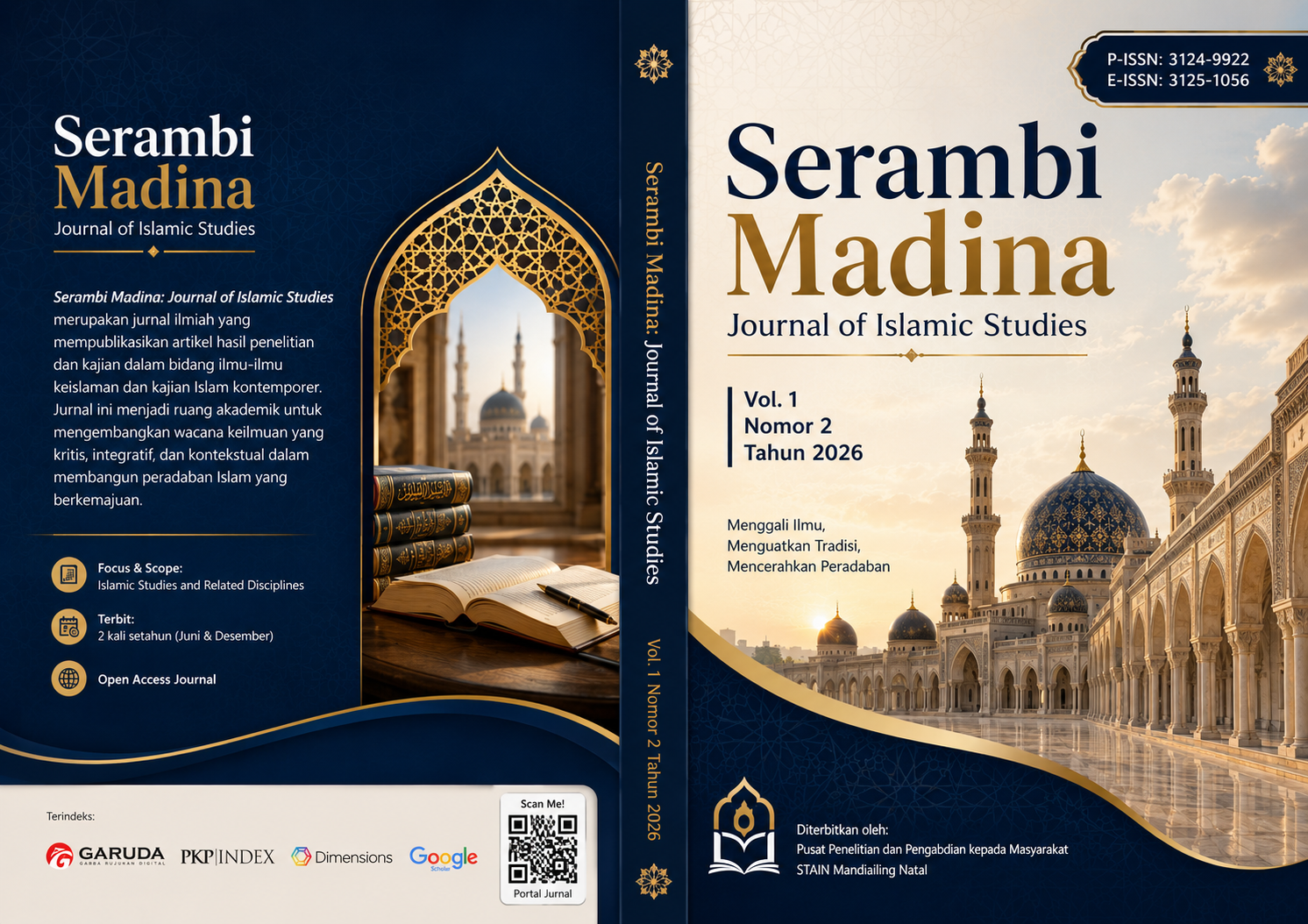
Serambi Madina: Journal of Islamic Studies is licensed under a https://creativecommons.org/licenses/by-nc-sa/4.0/
Serambi Madina: Journal of Islamic Studies is committed to supporting the open and responsible dissemination of scholarly knowledge. Accordingly, all articles published in the journal are licensed under the Creative Commons Attribution-NonCommercial-ShareAlike 4.0 International License (CC BY-NC-SA 4.0). This license grants readers, researchers, and the wider public the freedom to access, copy, distribute, and adapt published works, provided that appropriate attribution is given to the original authors, the works are not used for commercial purposes, and any derivative works are distributed under the same license. Through the implementation of this licensing policy, Serambi Madina strives to foster an inclusive, collaborative, and sustainable academic ecosystem that encourages the advancement, exchange, and global dissemination of knowledge in the field of Islamic studies at both the national and international levels.